
How to Start an Interior Career in 2026 (Step-by-Step)

Starting an interior career in 2026 doesn’t require a dramatic leap, a design degree from day one, or years of unpaid internships. What it does require is clarity, structure, and a realistic understanding of how the industry works today.
Whether you’re dreaming about becoming an interior decorator, stylist, or working professionally with interiors in another role, this guide walks you through the process step by step — from mindset to skills, education, and your first real projects.
This is not a “quit your job tomorrow” story. It’s a how-to for building a creative career intentionally.
Step 1: Understand what an interior career actually means today
Before you start Googling courses or buying software, you need to understand what “working with interiors” really looks like in 2026.
An interior career is not one single job. It can mean:
Working as an interior decorator with private clients
Styling homes for sale, photography, or short-term rentals
Working in a studio, showroom, or retail environment
Supporting architects or developers with concept, color, or FF&E
Running your own small business or working freelance
Combining interiors with sales, visual merchandising, or consulting
Most professionals don’t start knowing exactly where they’ll land — and that’s completely normal. The goal at the beginning isn’t to niche down perfectly, but to build a strong foundation that keeps your options open.

Step 2: Get clear on why you want to work with interiors
This step is often skipped — and it shouldn’t be.
Ask yourself:
Do I enjoy solving problems visually?
Do I care how spaces feel, not just how they look?
Do I enjoy helping people make decisions?
Do I want creative work that still feels practical and grounded?
Interior work is about people just as much as it’s about spaces. Clients often come confused, overwhelmed, or unsure — and your role is to create clarity, not just beauty. If you’re drawn to that mix of creativity + structure, you’re on the right track.

Step 3: Learn the fundamentals (before trends)
One of the biggest mistakes beginners make is jumping straight into trends, Pinterest boards, or aesthetics — without understanding the fundamentals.
In 2026, clients don’t hire decorators because they know trends. They hire them because they know how to:
Work with space and proportion
Understand light (natural and artificial)
Use color intentionally, not randomly
Create flow between rooms
Balance function with atmosphere
Communicate ideas clearly
Trends come and go. Fundamentals stay.
A strong education or learning path should focus on:
Layout and space planning
Color theory and material choices
Styling principles
Client communication
Practical tools used in the industry

Step 4: Choose an education path that fits real life
You do not need to study full-time for years to start an interior career.
In fact, many successful designers and decorators start by:
Studying part-time
Learning while working another job
Building skills gradually
Applying what they learn immediately
When choosing how to study, look for:
Flexibility (so you can combine it with life)
Structure (so you don’t feel lost)
Practical assignments (not just theory)
Tools that are actually used professionally
Guidance, not just videos
The goal is not to “finish fast” — it’s to build confidence and competence.
Step 5: Start practicing before you feel ready
This is where many people get stuck.
They think:
“I’ll start when I know more.”
But in reality, you learn by doing.
Early practice can look like:
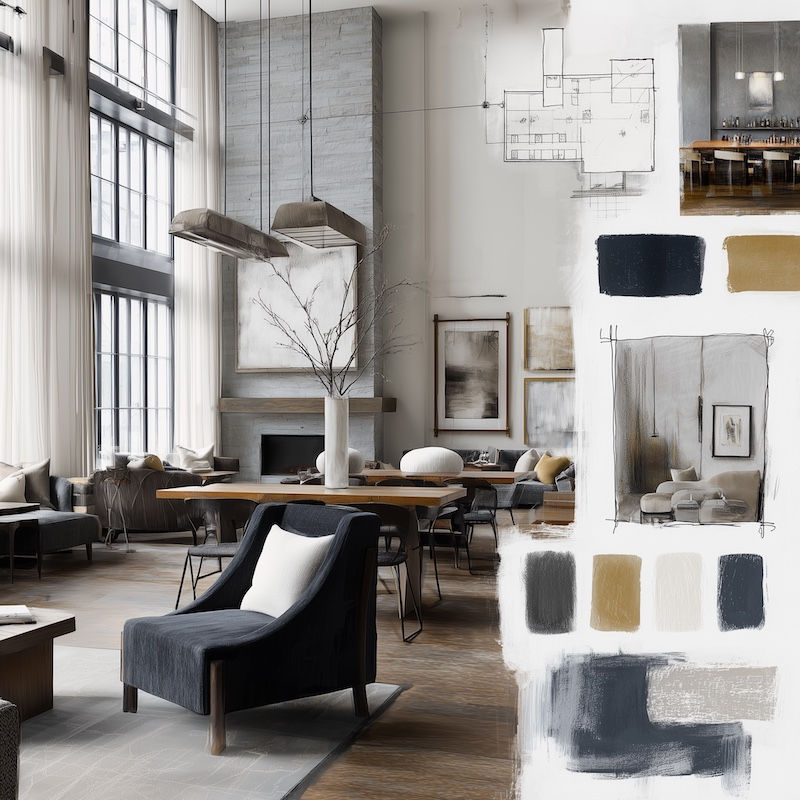
Redesigning your own home (on paper or digitally)
Creating concept boards for imaginary clients
Helping friends with layout or color decisions
Styling one room at a time
Practicing presentations, not just designs
You don’t need real clients immediately. You need experience thinking like a professional.
Confidence comes after practice — not before.

Step 6: Build a beginner portfolio (yes, even without clients)
In 2026, a portfolio doesn’t have to be huge — but it does need to show:
Your ability to think in concepts
Your understanding of space and color
Your visual communication skills
Your design process (not just the final result)
A beginner portfolio can include:
Concept projects
Room redesigns
Before/after concepts
Moodboards and layouts
Visualizations or styling plans
Clients and employers are not expecting perfection — they’re looking for potential, clarity, and professionalism.

Step 7: Understand that there is more than one “right” career path
Some people go freelance.Some work in studios.Some combine interiors with sales, styling, or consulting. Your first step doesn’t lock you in forever.
What matters is that you:
Start learning
Build transferable skills
Gain experience
Stay curious and adaptable
Most interior professionals evolve their role over time. Starting small is not a weakness — it’s how careers grow sustainably.

Step 8: Give yourself permission to start imperfectly
This may be the most important step of all.
You don’t need:
A perfect plan
Total confidence
A clear five-year vision
You need:
Willingness to learn
Patience with yourself
A realistic structure
And the courage to begin
By this time next year, you could be:
Designing confidently
Presenting ideas clearly
Working with real projects
Moving toward a creative career that fits your life
But only if you start.
So… how do you start an interior career in 2026?
You start by:
Understanding the industry
Learning the fundamentals
Choosing education that fits your life
Practicing before you feel ready
Building confidence step by step
There is no “perfect moment.” There is only momentum. And 2026 is a very good year to begin.
Next step..
If you’re curious about studying interiors in a structured, flexible way, explore our programs or start with our course guide to see what path might fit you best.
You don’t have to decide everything today.You just have to take the next step.


"How to Start an Interior Career in 2026 (Step-by-Step)" was a great read, and I liked how clear and grounded the writing felt. The michigan paycheck angle was especially helpful for what I'm working on. Appreciate you publishing this.