
Interior Design Trends 2026 – Warmth, Nostalgia, and Personal Homes Take Over

The interior design trends of 2026 mark a clear shift in how we view our homes. After several years of pared-back aesthetics, neutral color palettes, and almost clinical calm, we are moving toward something warmer, richer, and more human. The home is no longer a place meant to impress—it is a place meant to support us.
In 2026, interiors are shaped by feeling rather than rules. Personality comes before perfection. Layers, color, materials, and details work together to create spaces that feel lived-in, welcoming, and deeply personal. This is an approach to design that isn’t afraid to show signs of life—and that, in fact, becomes more beautiful over time.
At the same time, 2026 is not a chaotic mix of expressions. On the contrary, there is a clear common thread: warmth, security, and identity. The color palette grows deeper, forms soften, and materials become more tactile. We choose fewer items, but with greater care. New is mixed with old, handmade with contemporary, playfulness with weight.
What sets the interior trends of 2026 apart from previous years is that they are not about individual objects, but about how the home is experienced as a whole. Floors, walls, and ceilings become just as important as furniture. Table settings become part of the interior. Small details carry great significance.
This is also the year when many people let go of the idea of “the perfect home.” Instead, we create homes that reflect who we are, what we love—and how we actually live. A home in 2026 is never finished. It is ongoing.
Below, we’ve gathered the seven most important interior design trends of 2026. Together, they shape a new way of decorating: more emotional, more personal, and more long-term. Each trend can stand on its own—but together they tell the story of how we want to live now.
To understand the interior design trends of 2026, we need to start with the foundation: color. This is where the atmosphere of the home is set—and where the biggest change takes place.
1. Warmth & Deep Tones – Brown as the New Base Color in 2026
Looking back at recent years, it’s clear that color palettes have been cautious. Beige, greige, and soft natural tones have dominated—often with the goal of creating calm. In 2026, that calm evolves, but with significantly more depth, warmth, and personality. Color becomes more emotional than neutral.
The most notable shift is the rise of brown as the new base color—not as an accent, but as a foundation. Where white and light beige once carried entire rooms, brown now takes on that role. From chocolate and espresso to chestnut and walnut, brown feels grounding, safe, and stable. It’s a natural response to a time when many seek homes that feel protective rather than exposed.

From Beige to Brown – A Natural Evolution
We’re not leaving neutrals behind—we’re deepening them. Brown is still calm, but far more present. It creates rooms that feel warmer, more enveloping, and more permanent. A brown room doesn’t signal caution—it signals confident security.
In 2026, brown isn’t limited to textiles or furniture. It appears on walls, millwork, and in wood finishes. Dark-stained oak, walnut, and other rich wood tones become key carriers of color rather than neutral background materials.

The 2026 Color Palette – Depth, Glow, and Balance
Around brown, a palette emerges that feels both rich and harmonious. Green plays a key role, particularly in muted, sophisticated shades like olive, misty green, and sage. These tones extend the presence of nature and bring balance to heavier color schemes.
Plum, wine red, and purple add a more emotional and romantic layer. They’re often used in smaller doses—velvet, glass, or lacquered details—where the color is felt rather than dominating. Paired with brown, they create an expression that is both warm and refined.
Mustard, honey, and burnt orange continue to be important, but in a more mature interpretation. Orange in 2026 is roasted and glowing rather than sharp, often appearing in lighting, ceramics, or art.

We also see early signs of what’s next: clear blue and emerald green begin to appear as contrasts to warm tones—used sparingly, but signaling a future move toward bolder color choices.
Color as Atmosphere
What defines the color trend of 2026 is how color is used to create mood. Color becomes architectural rather than decorative. Walls, trim, and built-ins are often painted in the same shade to create cohesive, enveloping spaces. Contrast is softened in favor of depth.
Matte surfaces dominate, balanced by glossy elements—glass, metal, or lacquer—to add life and variation. The result is rooms that feel both calm and rich.
How We Combine Colors in 2026
Tone-on-tone: multiple shades of the same color for depth
Warm contrasts: brown + green, brown + blue, brown + orange
Materials as color: wood, textiles, and ceramics carry as much color as painted surfaces
A common mistake is mixing too many strong colors without cohesion. The key is choosing one dominant base (often brown), one supporting color, and one accent.
How to Bring the Trend Home
Paint a room or accent wall in a deep brown tone
Introduce darker wood in smaller furniture or details
Add green or plum-colored textiles
Use warm-toned lighting to enhance the glow
As the color palette becomes warmer and deeper, our relationship to style shifts as well. Instead of chasing what’s new, we look backward—not out of nostalgia alone, but in search of comfort and recognition.
2. Nostalgia, Retro & Emotional Design – Homes That Are Felt, Not Just Seen
One of the strongest interior trends of 2026 isn’t tied to a specific decade, material, or color—it’s tied to emotion. We move away from ideals of perfection and uniformity and toward homes that evoke memories, comfort, and familiarity. Nostalgia and retro become tools for something larger: emotional design.
This isn’t about recreating a 1970s living room or a 1990s home exactly. It’s about borrowing elements that feel familiar, warm, and human—and combining them with contemporary function and aesthetics. The result is homes that don’t try to impress at first glance, but feel better the longer you stay.

From Style to Feeling
For years, interior design has focused on defined styles: minimalist, Scandinavian, modern. In 2026, the focus shifts to how a space makes us feel. Nostalgia becomes a natural language because it creates emotional safety. A room that reminds us of something familiar—a color, material, or form—often feels more calming than one that’s strictly on-trend.
The nostalgia of 2026 is soft and inclusive. There’s no demand for authenticity or correct eras. A 1970s armchair can sit next to a modern sofa. An heirloom can coexist with new design. The story matters more than consistency.
The 1970s–1990s Reimagined
Retro in 2026 draws primarily from the warmth of the 1970s, 1980s, and 1990s.
From the 1970s: earthy tones like brown, mustard, olive, and orange
From the 1980s: playful mixes of color and form, bold contrasts
From the 1990s: homes filled with life—layered rugs, bookshelves, textiles, and personal details
The difference today is intention. Furniture is more comfortable, materials more refined, and the overall look more balanced. This is retro without irony—and without excess.

Emotional Design – The Home as a Story
Emotional design is a key concept in 2026. The home is no longer a project—it’s an extension of identity and lived experience. Objects are allowed to carry memories, wear, and personal choices.
We see more homes where:
books are left out, not hidden
art and photographs hang slightly asymmetrically
furniture doesn’t match perfectly, but connects emotionally
This approach prioritizes authenticity over aesthetics—though the result is often deeply beautiful because it feels real.
Retro Colors, Materials & Forms in 2026
Tactile, warm materials reinforce the retro feel: velvet, corduroy, wool, and heavier weaves. Wood is dark or stained, with visible grain. Leather returns in brown and cognac tones.
Forms are rounded and generous. Furniture looks inviting rather than rigid. Low sofas, deep armchairs, and substantial side tables create homes meant for lingering.
How to Mix Old and New
Balance is key. Going too far can make a home feel dated rather than timeless.
We recommend:
letting one or two retro elements lead
pairing them with modern surfaces, lighting, or art
keeping the color palette cohesive
A modern home with nostalgic elements feels relevant. A nostalgic home without contemporary references risks being stuck in the past.
How to Create a Nostalgic Yet Modern Home
Choose a warm retro base color and build from there
Add textiles with texture and pattern
Mix old and new with confidence
Let personal objects be visible—not just “correct” decor
As homes become more emotional, furniture must do more than look good—it must feel right in the body.
3. Embracing Forms – Rounded Furniture and Comfort as Status in 2026
If one furniture trend defines interior design in 2026, it’s embracing forms. We’re moving away from sharp lines, rigid furniture, and visually “correct” proportions—and toward pieces that feel soft, generous, and almost protective. Comfort is no longer secondary. Comfort is design.
This reflects how we live today. The home isn’t just a place we pass through—it’s where we recover, socialize, work, and spend much of our lives. Naturally, our demands on furniture change. We want to sit deeper, rest longer, and feel enveloped rather than aligned.

When Comfort Becomes the New Luxury
Luxury has long been associated with materials and aesthetics—exotic woods, expensive fabrics, strict design. In 2026, luxury is defined by how a space makes us feel. A sofa you can truly sink into feels more luxurious than one that’s visually perfect but uncomfortable.
That’s why we see generous proportions, rounded corners, and soft contours. These pieces signal care, rest, and slowness. A home filled with embracing furniture says: stay awhile.
From Straight Lines to Soft Silhouettes
Rounded, tubular forms appear most clearly in sofas and armchairs—but the shift extends throughout the home.
Sofas are lower, deeper, and more modular. Armrests and backs flow into continuous shapes rather than separate elements. Armchairs feature rounded backs and wider seats that feel embracing rather than upright.
There’s also a sculptural quality. These pieces aren’t just functional—they act as visual anchors. A rounded sofa or armchair can define the entire space.

Modular Sofas, Poufs & Flexibility
Soft modular sofas are central. Instead of boxy modules, we see rounded sections that can be combined freely—playful yet sophisticated.
Poufs and ottomans become key players, not just extra seating but part of the room’s form language. Round poufs act as soft pauses between larger pieces, supporting relaxed layouts.
Flexibility is essential. Furniture adapts to life—not the other way around.
Curves Throughout the Home
The embracing aesthetic extends beyond the living room:
dining tables with soft edges
mirrors and wall decor
headboards and bedroom furniture
lighting with organic silhouettes
Architectural details follow suit: arched openings, rounded millwork corners, and softened kitchen islands create continuity and calm.
Materials That Enhance the Feeling
Texture matters. Bouclé, wool, velvet, and chenille add warmth and tactility. Color reinforces softness: creamy beiges, browns, misty greens, and gentle pastels. Deeper tones like plum or navy work beautifully on rounded forms.
How to Balance Soft Forms with Structure
To avoid a space feeling too “loose,” contrast is key:
defined rugs to anchor zones
graphic elements like lighting or art
grounding materials like wood and stone
As furniture softens and colors warm, we gain new freedom to layer, collect, and personalize—without losing calm.
4. Layer on Layer, Patterns & Gentle Clutter — Letting the Home Look Lived-In in 2026
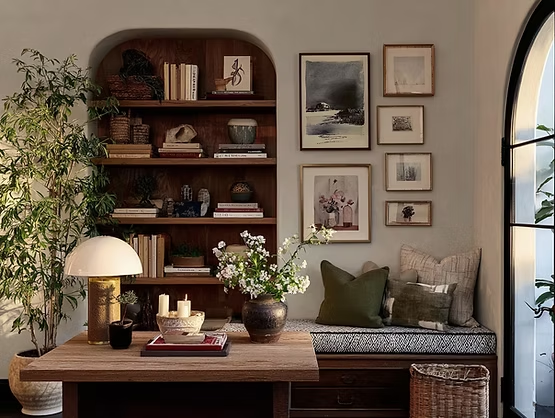
After many years of sleek surfaces, airy rooms, and an almost clinical approach to interiors, 2026 brings a clear shift. We’re no longer craving perfection—we’re craving life. That’s where layering, pattern, and what’s often called gentle clutter come in.
A home in 2026 shouldn’t look freshly staged. It should look lived in.
From Minimalism to Visual Richness
Minimalism taught us a lot: the value of calm, space, and intentional choices. But when pushed too far, it can become emotionally flat. In 2026, the pendulum swings back toward something richer, warmer, and more human.
Layering isn’t about filling every surface—it’s about creating depth. Rooms are no longer built around a few statement pieces, but through multiple interacting layers: color, textiles, pattern, materials, and personal objects. When those layers work together, a home feels grounded and alive.
What Does “Gentle Clutter” Mean?
The term gentle clutter describes an important nuance in 2026’s softer maximalism. It’s not mess, and it’s not overload. It’s a state where things are allowed to be out—with intention.
We see surfaces where:
books are stacked rather than lined up perfectly
ceramics and glass are grouped in small clusters
art leans against the wall instead of hanging “just right”
There’s softness in the expression. Objects are chosen because they mean something—not because they “match.” That’s exactly what makes the overall feel personal rather than chaotic.

Patterns in 2026 — Comforting Nostalgia and Playful Contrast
Pattern plays a decisive role in the layered look of 2026. We’re especially seeing:
florals with a nostalgic, almost textile-like feel
graphic checks and stripes that add structure
organic, hand-drawn patterns that feel softer than recent years
Patterns are no longer just accents. They take up space in rugs, textiles, wallpaper, and sometimes even furniture. The key is letting patterns “talk” to each other through a shared color temperature—even if the styles differ.
A floral pillow can work beautifully with a striped rug—as long as they share a common tone or warmth.
Layering with Textile, Color, and Material
Textiles are the foundation here. We build rooms with:
rugs layered on rugs
curtains in multiple layers
pillows in different shapes and textures
throws left out, not neatly folded
Mixing materials is essential. Wool, linen, velvet, cotton, and bouclé work together to create tactility. The palette stays warm and muted, which helps even heavy layering feel harmonious.
Hard materials also contribute: wood, stone, ceramics, and metal add contrast and structure to all the softness.
The Balance Between Order and Life
A common fear with maximalism is that it will feel messy. In 2026, we solve this through repetition and pauses.
We repeat:
the same color across multiple objects
the same material in different parts of the room
the same shape language (rounded, angular, organic) at different scales
At the same time, we leave certain areas calm. An empty wall, a pared-back corner, or a clear tabletop gives the eye a place to rest—and makes the surrounding layers feel intentional.

How to Try Layering at Home
To bring in the trend without it feeling overwhelming:
start with textiles: rug, curtains, pillows
add pattern gradually, one at a time
let personal items replace “trend decor”
allow things to be out—but in small clusters
As interiors become more layered, surfaces matter more. Floors, walls, and ceilings step forward—not as background, but as active parts of the overall experience.
5. Statement Rugs, Decorated Surfaces & Dressed Rooms — When Floors, Walls, and Ceilings Take the Lead in 2026
For a long time, interiors focused on furniture and movable decor while floors, walls, and ceilings served as a neutral backdrop. In 2026, that changes fundamentally. Surfaces become expressive, intentional elements of the whole—sometimes even the strongest character carriers in the room.
We’re seeing statement rugs, decorated walls, painted millwork, and architectural details combine into what’s often called dressed rooms: spaces that feel “clothed,” thoughtfully built, and complete—rather than decorated after the fact.

From Background to Leading Role
Earlier trends treated floors and walls as things that shouldn’t distract: light floors, white walls, subtle rugs. In 2026, the perspective flips. Surfaces are used to create atmosphere, identity, and depth—sometimes even more than the furniture.
A room can now be built from the ground up. A powerful rug sets the palette. Walls are wrapped in color, paneling, or pattern to reinforce the mood. Ceilings are sometimes painted to match walls, creating an enveloping effect.
The result is rooms that feel more architectural, more cohesive—and far more personal.
The Statement Rug — The Foundation of the Room in 2026
The statement rug is one of the clearest symbols of 2026’s interior trends. It’s no longer a supporting piece—it’s the starting point.
We’re seeing rugs with:
bold patterns
daring color combinations
graphic or organic motifs
larger scale than before
The rug acts as an anchor, tying together color, materials, and furniture. In many cases, the rug is chosen first—and sofas, chairs, and textiles follow.
Another key shift: rugs are meant to be seen. They shouldn’t disappear under furniture; they should hold visual space. Sometimes rugs are even layered, with a smaller, more expressive rug placed over a larger, calmer base.

Decorated Walls and Ceilings
Walls in 2026 are rarely just painted white. Instead, we see:
deep, saturated color
wood paneling and slatted surfaces
wallpaper with a textile or hand-drawn feel
painted trim, molding, and millwork
This isn’t about constant decoration—it’s about deliberate choices. One wall can carry an entire room, especially when paired with the right light and textiles.
Ceilings also get more attention. Painting the ceiling the same color as the walls—or a slightly darker shade—creates an enveloping atmosphere that heightens the room’s mood.
Dressed Rooms — Spaces with Weight and Detail
Dressed rooms describes spaces that feel finished on a deeper level. It’s not just that the furniture is in place—the structural details are, too.
We see:
more substantial baseboards
defined door casings
panels, niches, and framing details
layered curtains and textiles
These elements add weight and permanence, making the room feel more architectural. It’s a move away from temporary solutions and quick fixes.
How to Combine Surfaces Without It Feeling Too Much
When both rugs and walls make statements, balance is essential. In 2026 we work with:
a clear palette (often 2–3 main colors)
repetition of materials and pattern
contrast between soft and hard
If the rug is bold and graphic, walls stay more tonal. If walls are patterned, the rug becomes calmer—but still in a clear color direction.
How to Bring the Trend Home
Choose a statement rug and let it lead the room
Dare to paint trim and millwork too
Build textile layers: rug, curtains, upholstery
Treat walls and floors as part of the design—not the backdrop
As homes become more composed and intentional, the desire for what feels real grows stronger. Handmade objects take on a new role—as a counterpoint to perfection.
6. Craft, Handmade Objects & Visible Handwork — When the Human Touch Becomes the New Luxury in 2026
In a time when so much of life is digital, fast, and mass-produced, 2026 brings a clear counter-movement in interiors: handmade pieces take on a natural, central place. Craft is no longer about a specific style—it’s about values. It becomes a way to create homes that feel authentic, personal, and human.
We’re increasingly drawn to objects that show traces of the maker. Small irregularities, variations in color, visible brush strokes, or fingerprints in ceramics aren’t seen as flaws—they’re seen as quality. These details are exactly what make an object feel alive.

From Mass-Produced to Meaningful
For a long time, accessibility and efficiency have been guiding principles in home design. In 2026, there’s a shift: we’d rather own fewer things with meaning than many things with no story.
Craft represents slowness, care, and intention. A handmade piece takes time to make—and that time is felt in the result. When we place such an object in our home, it creates contrast with the speed and noise of everyday life.
This doesn’t mean a home must be filled with one-of-a-kind objects. Craft is often most powerful when used thoughtfully—as a strong accent within an otherwise calm environment.
Visible Handwork and Artistic Imperfection
One of the clearest changes in 2026 is our relationship with perfection. Smooth, flawless surfaces can feel sterile and impersonal. We increasingly appreciate surfaces that show how they came to be.
That might look like:
ceramics with uneven glaze
wood with visible grain and texture
glass with variation in thickness and form
textiles where you can feel the weave and thread
This kind of artistic imperfection creates depth and character. These objects don’t demand attention, but they reward it when you look closer.
Glass, Ceramics, and Objects with Soul
Handmade glass and ceramics play a particularly important role in 2026. They function both as practical items and as decorative objects.
Glass adds light, reflection, and color. Candle holders, vases, and bowls in mouth-blown or colored glass become small light sources—even when unlit.
Ceramics add weight and grounding. Bowls, platters, and vases in stoneware or porcelain create tactile contrast against soft textiles and smooth surfaces. They’re often styled in small groups, reinforcing the feeling of collection and curation.

Craft as Contrast
In 2026, handmade pieces often act as contrast to more clean-lined, contemporary elements. A room with soft sofas and a quiet palette comes alive with a raw ceramic vessel or a sculptural glass vase.
It’s the tension between the controlled and the organic that makes the space interesting. Craft breaks up perfection—without sacrificing elegance.
How to Use Handmade Pieces Without It Feeling Rustic
A common misconception is that handmade automatically reads as country or bohemian. In 2026, it’s more about placement and context.
To keep it modern:
pair handmade pieces with cleaner-lined furniture
keep the palette limited
let one object hold space instead of many small ones
One strong handcrafted piece can carry an entire room.
How to Bring the Trend Home
Replace one mass-produced detail with something handmade
Create a small still life with ceramics and glass
Let materials speak—keep the rest calm
Think of these pieces as long-term investments, not trend buys
7. Playful Everyday Luxury — Colorful Table Settings, Glass, and Unexpected Details in 2026
When we summarize the interior trends of 2026, it’s clear that much revolves around depth, warmth, and longevity. But alongside the serious and considered, another equally important dimension grows stronger: playfulness. In 2026, we don’t just want to feel safe at home—we also want to feel happy in it.
This is where playful everyday luxury emerges: an interior style that isn’t reserved for special occasions, but elevates daily life. Details do the work—color, glass, ceramics, shapes, and surprising elements that energize a home without feeling childish.

Letting Everyday Life Shape the Interior
Previously, many homes were designed around how they look rather than how they’re used. In 2026, that line fades. Now, everyday life sets the tone.
The kitchen table becomes a stage for color and form. Shelves aren’t filled only with the “right” objects, but with things that are actually used. Candleholders, glasses, plates, and bowls are left out and become part of the room’s expression.
This makes a home feel more alive. It changes over time based on mood, season, and life stage—and that’s exactly what makes it interesting.
Colorful Table Settings — More Than Just Dinnerware
One of the clearest expressions of playful everyday luxury in 2026 is the colorful table setting. Plates, mugs, side plates, and bowls in pink, blue, green, red, and yellow create personality—even when the meal is simple.
The key is that color is used with intention, not randomly. We often see:
a limited palette repeated across pieces
a mix of solid colors and stripes
contrast between soft and graphic elements
The table setting becomes an expression of identity rather than an attempt to be “correct.” It’s okay if everything doesn’t match perfectly—often the mix is exactly what creates character.
Glass, Chrome, and Silver — The Return of Shine
Alongside color, glossy materials make a comeback. Glass, chrome, and silver add light, reflection, and a sense of modernity to warm, soft interiors.
Colored glass is especially strong. Vases, candleholders, and drinkware in blue, pink, green, or amber act like small light sources. They catch daylight, reflect lamps, and shift depending on the time of day.
Chrome and silver often appear as contrast. A shiny lamp, mirrored tray, or sculptural candleholder lifts the room and breaks against wood, textiles, and ceramics. It creates a balance between warm and cool—one of 2026’s signatures.

Playful Details with Grown-Up Balance
Playfulness in 2026 isn’t loud—it’s deliberate. It’s about shapes and objects that surprise you, but still feel thoughtful.
It could be:
a vase with an unexpected form
a figurine or sculpture with humor
a lamp in a bold color or unusual silhouette
The point isn’t for the room to feel silly—it’s for it to feel alive. Often one playful object is enough to lighten an otherwise serious space.
Small Objects, Big Impact
The beauty of playful everyday luxury is that it doesn’t require major changes. Often, the smallest details make the biggest difference.
A new glass on the kitchen table. A colorful mug on the shelf. A reflective object that catches light. When these details are allowed to live in everyday life, the home feels cared for—both the home itself and the life happening inside it.
How to Create Playful Everyday Luxury at Home
Swap part of your dinnerware for color
Let glass and ceramics stay out on display
Add one glossy detail as contrast
Choose one playful object that breaks the seriousness
But 2026 isn’t only serious, warm, and thoughtful. There’s also a clear desire for joy, color, and unexpected touches—especially in everyday life.

In Summary: Interior Design Trends 2026
At its core, the interior trends of 2026 are about truly coming home. We no longer decorate to impress—we decorate to feel good. To feel safe. To reflect who we are and how we actually live.
With warmer colors, softer forms, layered styling, more finished surfaces, craft, and playful details, we create homes that feel personal and long-term—homes that aren’t dependent on fast trends, but that evolve over time.
There is no template for what a “trendy” home in 2026 should look like—and that’s the point. The trendiest thing you can do is choose what feels right for you and build from there.
Whether you’re drawn to nostalgic palettes, rounded sofas, statement rugs, or colorful tablescapes, the common denominator is the same: a home with soul.
Frequently Asked Questions About Interior Design Trends 2026
❓ What colors are trending in 2026?2026 is dominated by warm, deep colors like brown, olive green, plum, mustard, and burnt orange. Clear blue and emerald green are also starting to appear as contrasts.
❓ Is minimalism out in 2026?Strict minimalism is losing ground, but it lives on in a softer version. The focus shifts toward layering, personality, and homes that feel lived-in rather than perfect.
❓ What furniture is trending in 2026?Embracing furniture with soft forms is a major trend. Rounded sofas, curved armchairs, and modular seating that prioritizes comfort are central to 2026 interiors.
❓ How do you decorate in a trendy but timeless way in 2026?Choose a warm base, work with natural materials, add personal elements, and avoid trying to follow every trend at once. 2026 is about longevity and feeling.
❓ What does “dressed rooms” mean?Dressed rooms are spaces where floors, walls, ceilings, and millwork are thoughtfully designed—with paint, paneling, trim, and textiles creating a cohesive expression.


Comments